When choosing a home adjustable bed for your parents, let the intended user check seated foot placement, control recognition, stopping and returning to flat, bed access and the bedroom layout. Head and leg articulation is not whole-bed height adjustment, and a “smart bed” label does not establish nursing-bed capabilities.
A bed that an adult child finds easy to use may not suit a parent. Age alone cannot replace personal assessment. Discuss usual sleeping habits, getting into and out of bed, and any assistance needed.
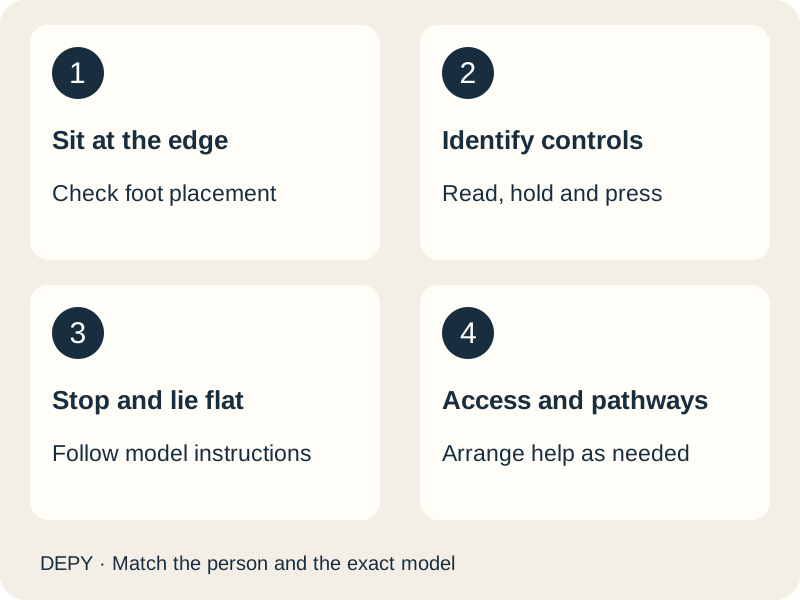
1. Start flat and check seated foot placement
Follow the product instructions and wait until movement has stopped. Where appropriate for the person's abilities, try sitting at the edge and check whether both feet rest naturally and securely on the floor without tiptoeing or sliding forward. Include the actual mattress when assessing bed-surface height. One height cannot be guaranteed suitable for everyone.
Illustrative situation: a mother likes the raised-back position but finds it difficult to place her feet on the floor at the edge. Check the complete setup's height and suitability first. This is a hypothetical decision example, not a customer case study.
2. Let the intended user identify and try the controls
Check whether the parent can distinguish symbols, press the buttons comfortably and hold the remote. Explain when needed without continually operating it for them. Lighting, memory and phone control depend on the model; do not assume they are standard.
Another situation: a father understands the demonstration but cannot distinguish head and leg controls when holding the remote. Resolve practical usability before choosing additional modes. A relative understanding the explanation is not proof that the intended user can operate it.
3. Learn how to stop and return to flat
Ask staff to demonstrate starting, stopping and returning to flat according to the exact model's instructions. Then try it with appropriate assistance. Do not assume a one-touch flat button or that every control stops movement when released. Keep the body, clothing and objects clear of moving mechanisms.
Stop if the experience causes discomfort; there is no need to complete every function. Also try usual sleeping positions with the surface flat. Brief comfort while sitting up does not establish long-term suitability.
4. Check bed access and bedroom layout together
Use the manufacturer's instructions to select a suitable position for getting into or out of bed, and confirm movement has stopped. Assess sitting up, foot placement and standing according to the person's abilities, with suitable assistance where needed. Independent completion is not a requirement. Check clear paths, lighting, remote and glasses placement, and cable routes.
If there is dizziness on rising, unsteadiness, a recent fall or a care need, seek advice from a health or rehabilitation professional about a suitable setup. A showroom trial is not a diagnosis, and an adjustable bed is not a guarantee against falls.
Why is articulation different from a nursing bed?
Common home adjustable beds change the angles of sections of the sleep surface. This does not establish whole-bed height adjustment or other functions required for care. State any need for height adjustment or assisted transfers explicitly and verify the intended product and use rather than relying on the word “smart”.
Record four things before ordering
- Bed-surface height with the mattress fitted and the person's seated foot placement.
- Ability to see, hold and operate everyday controls, including assistance needed.
- The model's stopping and flat-return procedure, and where the manual is kept.
- Suitable bed access, pathways and lighting, plus written installation, service and configuration details.
If the current bed is comfortable and convenient, additional functions alone are not a reason to replace it. Hear the parents' preferences before discussing an upgrade.
References and related reading
NCOA: Bedroom Safety for Older Adults offers background on bed height, clear pathways, lighting and personal suitability. Captured 12 October 2026; archived text reviewed 16 October 2026. It does not establish DEPY efficacy claims or nursing qualifications.
Related: Frame and mattress compatibility · DEPY model selection · Different positions for two sleepers.
A buying checklist prepared by DEPY; not a substitute for clinical care, a care assessment or individual transfer instruction.